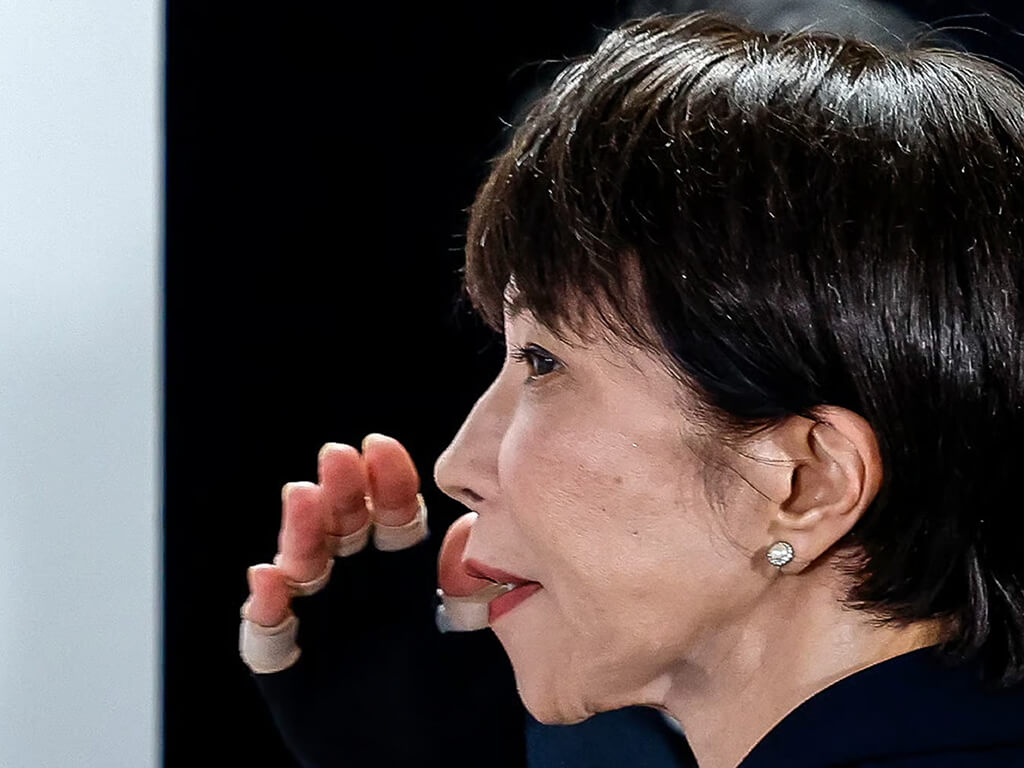

Japan is entering a new political phase after years of instability, weak mandates, fragmented governance, and a rapid turnover of prime ministers that left the country without clear direction. When a new leader took office last October, few expected any real departure from that pattern. Sanae Takaichi, the first woman to hold the post, was initially met with public indifference, shaped by the assumption that the familiar cycle of fragile leadership would simply repeat itself.
Instead, Takaichi began to upend those expectations. She earned public confidence not through symbolism, but through substance: a forceful governing agenda, promises of a stronger economy, improved livability, renewed national pride, and a clearer articulation of conservative values. It was a political language many voters felt had been missing for years.
A Historic Political Mandate
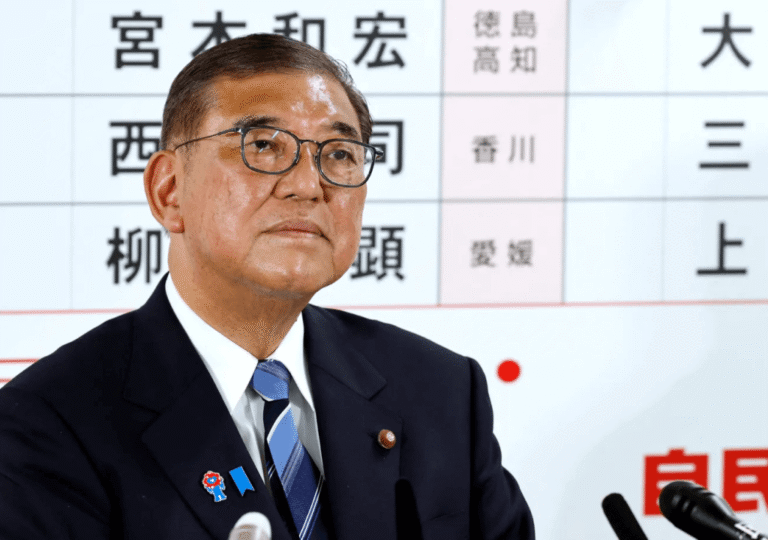
Sanae Takaichi’s leadership received decisive public approval in the February 8 snap election, when a coalition led by her secured a commanding supermajority in the lower house of Parliament, a result supporters described as a national political reset. The 64 year old leader, who called the early election soon after becoming prime minister last autumn, had vowed to resign if her coalition failed to secure a simple majority. Instead, her confidence and determination were decisively affirmed at the ballot box.
Voters braved icy roads and wintry winds to cast their ballots, underscoring the intensity of public engagement in a contest widely seen as a turning point.
Her Liberal Democratic Party (LDP) won 316 seats, comfortably surpassing the 261 required for an absolute majority in the 465 member lower house, marking the party’s highest seat count since its founding in 1955.
The result leaves the country with a stronger Parliament than it has had in years, a consolidated governing coalition, and a prime minister with a mandate that few of her predecessors enjoyed. It also represents a remarkable reversal of fortune for the LDP, which governed Japan for much of the past seven decades but had suffered a series of bruising defeats in recent years, leaving it in the unusual position of minority status in both houses of Parliament.
With her coalition partner, the Japan Innovation Party, which won 36 seats, Takaichi now commands a two thirds supermajority. This gives her the power to override the upper chamber, which she does not control, significantly easing the passage of legislation and consolidating her authority over Japan’s political system.
A Shift to the More Right in Japanese Politics
The election result also reflects a broader rightward shift in Japanese politics. Right wing groups are gaining strength nationwide, while left wing influence continues to weaken, pushing the political center of gravity from the center toward the far right. Sanseito, a party that shares some similarities with the MAGA movement associated with Donald Trump, won 15 seats, up from two. Despite its relatively small size, the party has gained an outsized voice in national politics and has begun exerting pressure on Takaichi to raise stagnant wages and tighten immigration policies.
With a full mandate and a weakened opposition, Takaichi is now expected to push long sought conservative priorities, including the enactment of an anti espionage law and amendments to Japan’s pacifist constitutional clause to expand the scope of the country’s military. She is also positioned to advance a broader conservative agenda on defense and social policy while strengthening her international standing. Her campaign received notable international backing, including a public endorsement from U.S. President Donald Trump, who congratulated Takaichi on her election victory and wished her “great success in passing your Conservative, Peace Through Strength Agenda” in a social media post. The two leaders are scheduled to meet in Washington in March.
Economic Stakes and Market Reaction
The economy dominated the campaign. Takaichi’s spending plans rattled financial markets and triggered currency volatility, raising questions about long term sustainability, particularly given that Japan’s debt exceeds twice the size of its gross domestic product, the highest debt burden of any advanced economy. Even so, Takaichi has long been a proponent of fiscal stimulus as a tool to break Japan’s deflationary cycle. She appealed to voters with a 21 trillion yen (£99 billion) stimulus package aimed at easing the cost of living crisis. She also pushed through a record supplementary budget last year and accelerated plans to increase military spending and expand state led investments in artificial intelligence and semiconductor manufacturing.
She further promised to suspend the 8 percent consumption (sales) tax on food for two years, a move estimated to cost 5 trillion yen in annual revenue. Takaichi has ruled out issuing fresh debt to fund the tax cut but has remained vague on alternative revenue sources, saying funding details would be resolved through cross party debates on social welfare and taxation. Japanese families continue to face rising costs for essentials such as energy and fresh food, intensifying pressure on the government to deliver economic relief, with expectations of a consumption tax cut now firmly in place.
Despite mixed reactions within the business community, markets responded positively to the prospect of a stronger and more stable government. Japanese stocks surged. The benchmark Nikkei 225 jumped 5 percent in early trading. Japanese shares hit record highs, with the Nikkei surpassing 56,000 points for the first time and briefly pushing through 57,000 before closing up 3.9 percent at 56,363 points.
On currency markets, the yen initially fell 0.3 percent against the dollar to its weakest level in two weeks before strengthening by as much as 0.7 percent, later trading 0.5 percent firmer at 156.43 yen to the dollar.
Some analysts suggested Takaichi’s strong mandate might give her room to retreat from parts of the plan, especially as opposition parties advocating even bolder tax cuts suffered heavy defeats. Takaichi rejected that view in televised interviews, stating she would move quickly to implement the Liberal Democratic Party’s promise to suspend the levy.
Escalating Regional Tensions
Public support for Takaichi’s vision of a stronger Japan has been intense, but it is also reviving deep regional anxieties. For many of Japan’s neighbors, the idea of a more assertive Japanese state carries heavy historical memory and lingering fear. Takaichi’s push for regional strength has already strained relations, particularly with China, and those tensions are likely to deepen in the months ahead.
In November, she said Japan could intervene militarily if Taiwan were attacked, a statement she has refused to withdraw. China responded with a series of economic reprisals, including restrictions on Japanese seafood imports, discouraging tourism, limiting exports of critical minerals, and curbing cultural exchanges, including the suspension of panda diplomacy. China’s foreign ministry has said talks cannot take place while Takaichi continues to pursue what it calls a confrontational approach.
Tensions escalated further after the election, when Japan seized a Chinese fishing vessel inside its exclusive economic zone, arresting its 47 year old captain after he allegedly refused an inspection order near Nagasaki. It was the first such seizure since 2022 and the first involving a foreign fishing vessel this year.
China urged Japan to safeguard the crew’s rights and uphold the China Japan fisheries agreement. Japan may comply, but tighter maritime security and more assertive enforcement at sea now appear inevitable. In a shifting global order, Takaichi’s vision of a stronger, more confident Japan is likely to intensify geopolitical volatility, heightening the risk of sharper regional tensions and a more unstable security environment in East Asia.
High Expectations at Home and Abroad
Takaichi has now entered a more challenging phase: translating broad public confidence into lasting governance. Both at home and abroad, expectations are high. There is a widespread sense that Japan is reasserting itself on the global stage, with renewed political authority and economic ambition. The path ahead is hers to define, with few obstacles remaining to achieving her vision to Make Japan Great Again.